B2B vs B2C Marketing: The Difference That Changes Your Strategy
Categories
- UI/UX
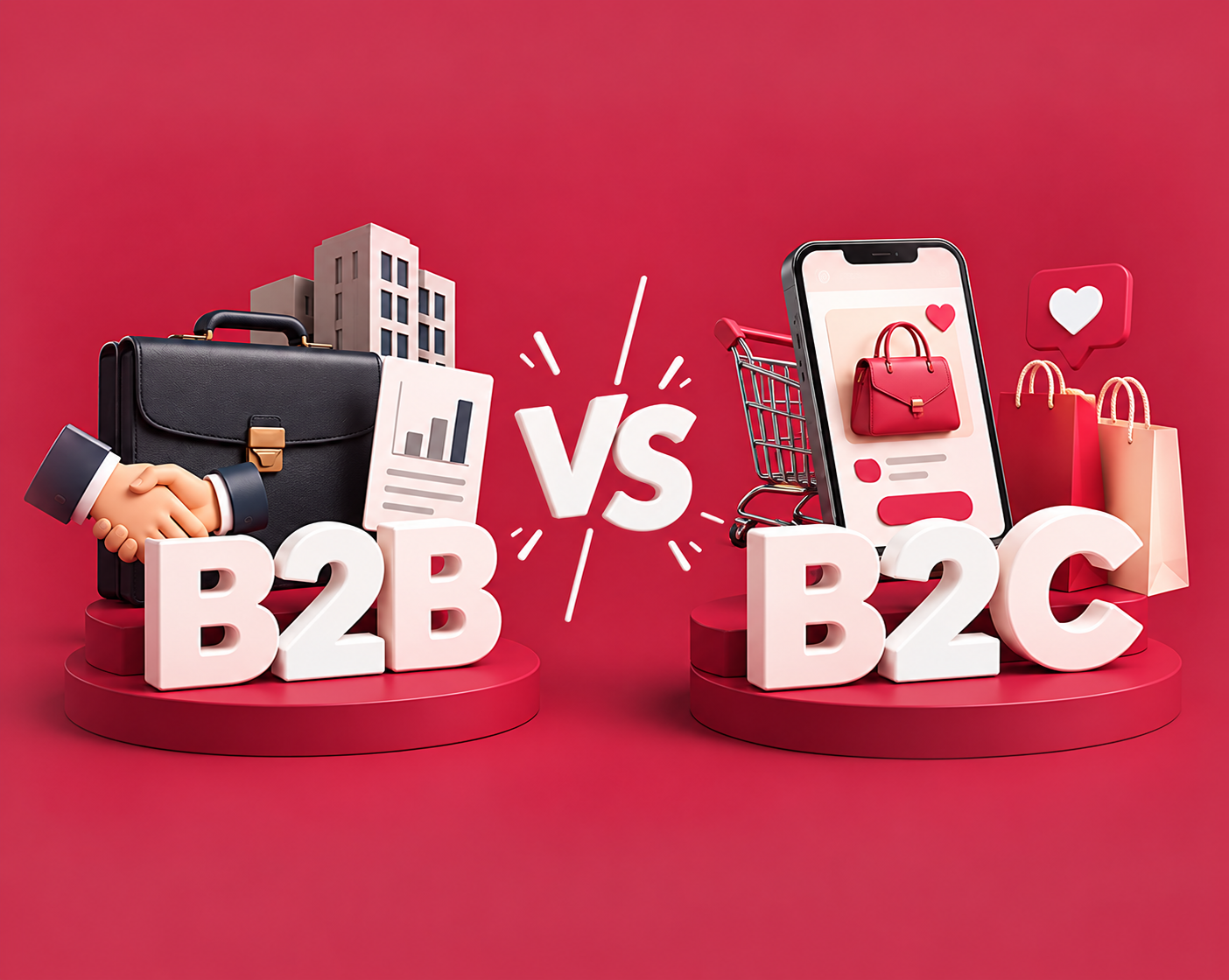
B2B vs B2C Marketing: The Difference That Changes Your Strategy
Business-to-business and business-to-consumer marketing use many of the same tools, including content, search, advertising, and email. However, the way these tools are used changes because the target customer, reason for buying, number of decision-makers, and length of the journey are different.
B2B means marketing from one business to another, while B2C means marketing directly from a business to an individual consumer. Understanding this distinction shapes the message, evidence, channel mix, and method of measuring success.
Who Is the Audience?
In B2B marketing, a company speaks to an organisation, decision-maker, or buying team. The decision may involve a department manager, finance, technical specialists, and senior leadership. Content must therefore answer different questions and prove value to more than one stakeholder.
In B2C marketing, the company speaks to an individual or household. Fewer people are usually involved, and the purchase may happen more quickly, particularly when the product is clear and easy to compare.
How Does the Buying Decision Differ?
The B2B sales cycle is generally longer and more complex. Customers focus on efficiency, return, risk reduction, implementation, and long-term value. They need clear details, a practical proposal, and evidence of experience.
In B2C, the decision is more closely linked to personal needs, convenience, price, experience, and brand appeal. This does not mean B2B decisions are purely rational and B2C decisions purely emotional. Trust and emotion matter in both, but the risk and context differ.
How Does the Message Change?
In B2B, a decision-maker wants to understand the effect on performance: Will the solution reduce costs? Improve productivity? Can it be implemented securely? The message should be precise and supported with relevant use cases, results, and business examples.
In B2C, customers need to understand the personal benefit quickly. The message should explain how the product makes life easier or better, how it differs from alternatives, and why the customer should act now.
How Does the Content Change?
B2B content usually supports a longer journey. Useful formats include case studies, specialist guides, demonstrations, solution pages, articles addressing specific business problems, and comparisons that help people assess options.
B2C commonly benefits from product videos, user-generated content, reviews, images, short videos, seasonal campaigns, email, and personalised recommendations.
How Do the Channels Differ?
No channel belongs exclusively to one model, but priorities differ. B2B companies often use search, websites, professional platforms, email, events, and direct sales to build trust with accounts and decision-makers.
B2C brands rely more heavily on social platforms, ecommerce, content creators, visual advertising, email, and messaging to encourage a faster decision. In both models, the right channel is the one used by the audience and connected to the intended result.
How Does Measurement Differ?
Important B2B measures include qualified opportunities, opportunity cost, sales-cycle length, contract value, and close rate. Marketing may need more time to demonstrate its effect because the decision moves through several stages.
B2C teams may focus on conversion rate, sales, average order value, customer acquisition cost, and repeat purchase. Results may appear more quickly when the buying journey is direct.
Can a Company Use Both Models?
Yes. A company may offer services to organisations and products to individuals at the same time. In this situation, both audiences should not be pushed through one page, message, and journey.
Create clear segments, pages, offers, and metrics for each audience. The main identity may remain consistent, but the value proposition, content, and call to action should reflect the real buying context.
At Malqaa, strategy begins by understanding the person behind the decision and the action the brand wants to support. When the customer model is clear, the message, channels, and content become more precise and effective.